
Free resources
Templates you can use now.
Start with document control and contacts
Put the artist, production name, show configuration, revision date, and primary technical contact near the front. If the document is venue-specific, add the venue and show date. A crew should be able to confirm within seconds that it has the current file and knows whom to contact about a conflict.
- Artist or production name and lineup
- Revision number and revision date
- Technical, tour, and emergency contacts where appropriate
- Show date, venue, and performance format when specific
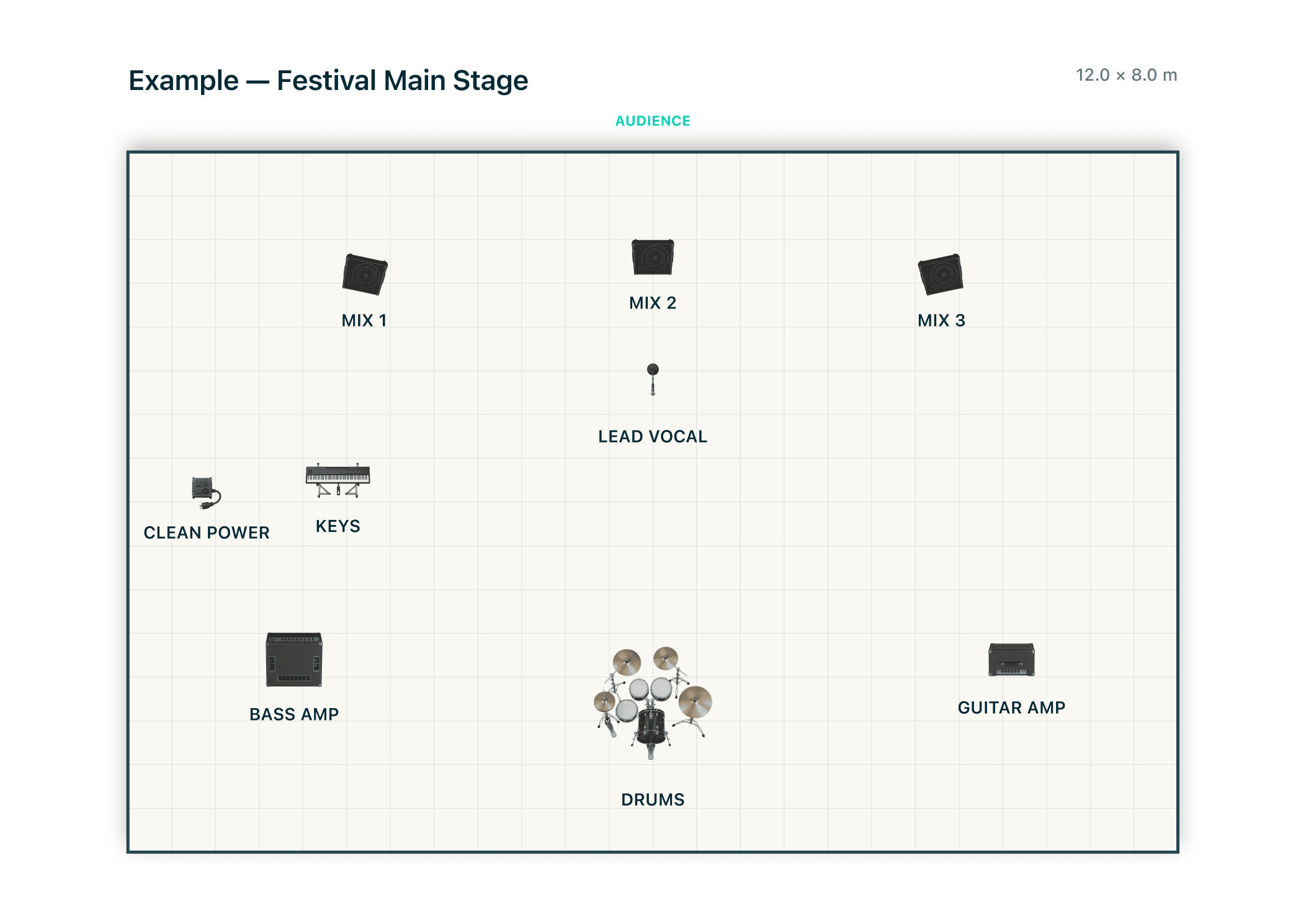
Add the stage plot and signal lists
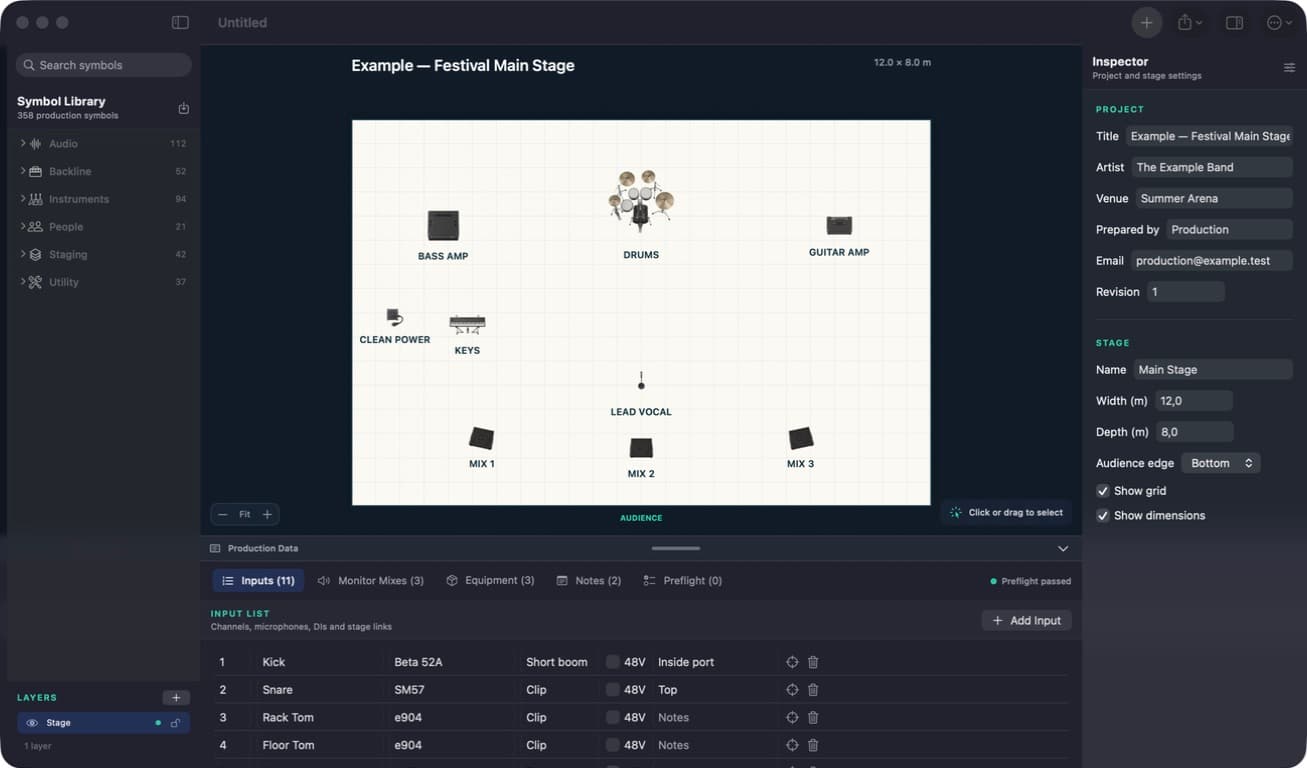
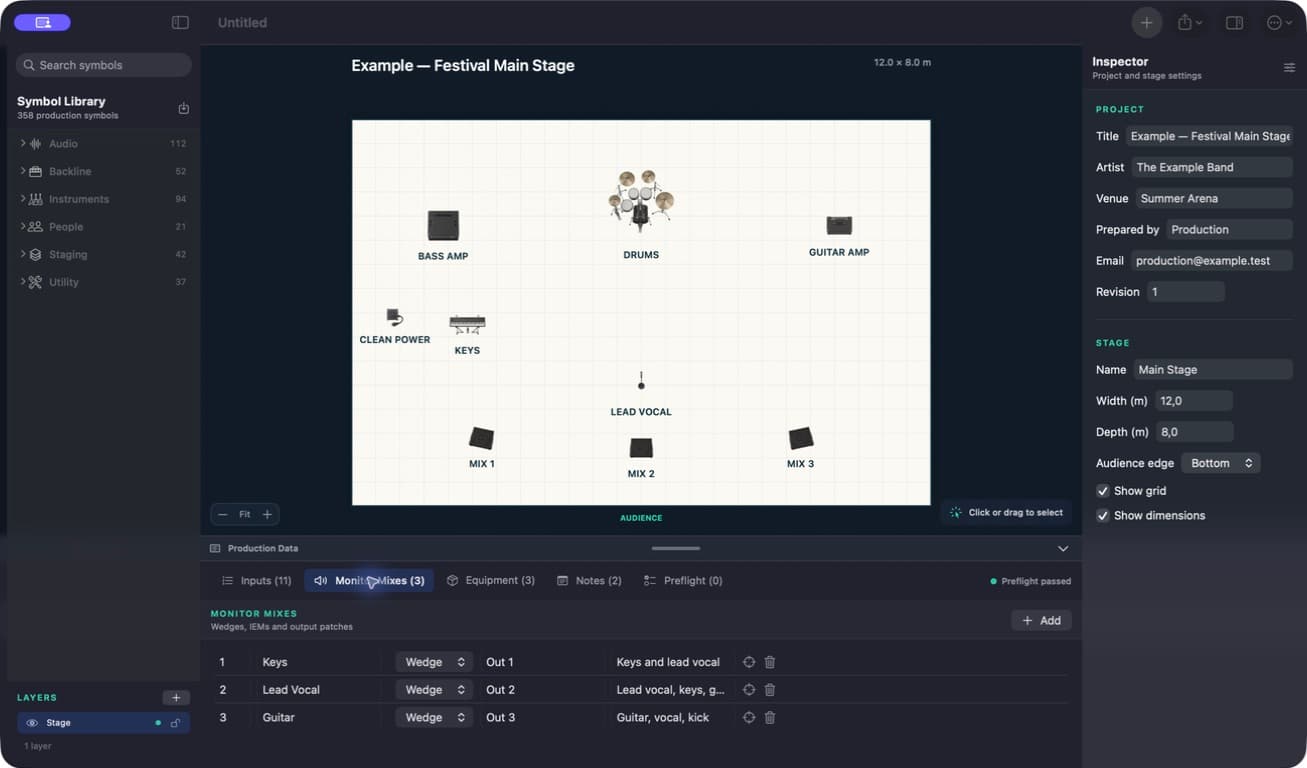
The stage plot explains physical positions. The input list translates sources into console channels, microphones, DIs, stands, and patch destinations. A monitor list adds mix ownership and delivery method. Keep the same source names and numbers across all three sections.
When the plot changes, regenerate or review every dependent list. Sending a revised drawing with an old patch is one of the fastest ways to create uncertainty during line check.
Separate requirements, preferences, and supplied equipment
State which items are essential to the show, which are preferred but substitutable, what the artist supplies, and what the venue must supply. Explain unusual constraints briefly. A venue is more likely to solve a requirement when it understands the operational reason behind it.
- FOH and monitor console requirements
- Stage boxes, splits, networking, and playback connections
- Microphones, stands, DIs, backline, risers, and furniture
- Power, rigging, lighting, video, communications, and staffing
- Approved substitutions or advance-contact instructions
Include schedule and venue questions
A compact production schedule can cover access, load-in, setup, soundcheck, doors, performance, curfew, and load-out. If timings are not final, identify the decisions still needed instead of presenting placeholders as confirmed information.
End with a short advance checklist: stage dimensions, power standard, console and stage-box models, local inventory, crew calls, parking or loading access, and any restrictions that affect the plan.
Keep the final rider concise and current
Remove empty boilerplate and requirements that do not apply to the current show. Export a searchable PDF, include page numbers and the current revision, and use a filename containing the artist and revision date. Send one current pack rather than several attachments that can drift apart.
Template proof // blank + completed
See how the template becomes a production pack.
The blank five-page rider template prompts the details a venue needs. The completed Stage Plot Forge example shows the app-supported stage, input, monitor, equipment and notes pages filled from one working project.
Build the working document on your computer.
Stage Plot Forge keeps the visual plot, production lists, notes, and exports together in one local project.
Download Stage Plot Forge